
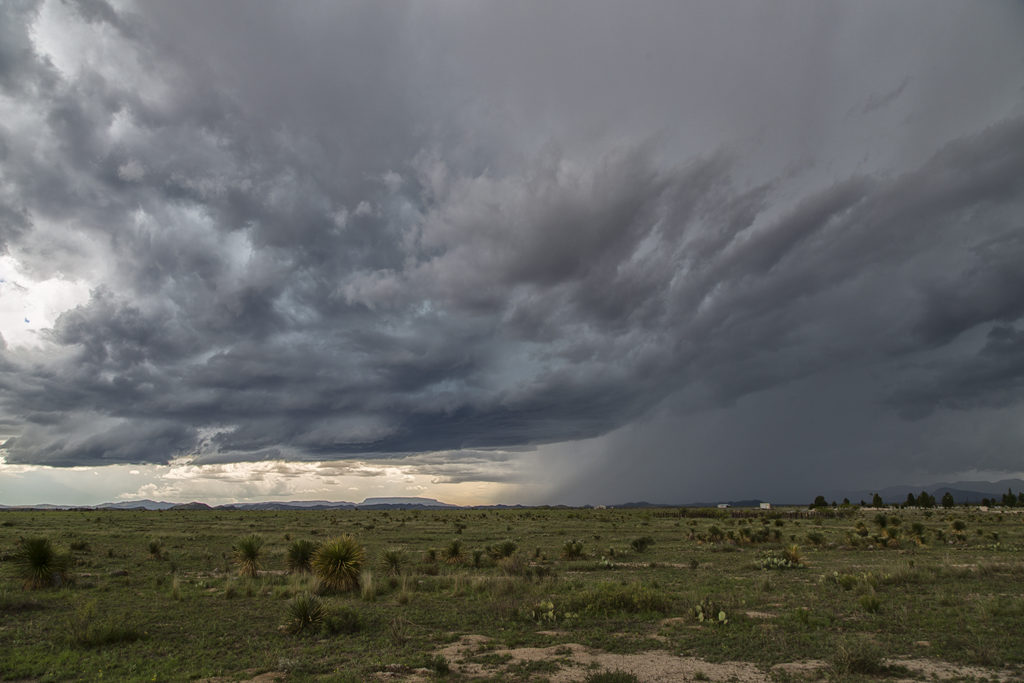
June 1st continued the streak of limited moisture and shear for the US. We decided to chase the Davis mountains in southwest Texas and were treated to a pretty storm with very large hail to tennisball size. Two supercells emerged from the mountains with one storm in particular becoming a prolific hail producer. It tracked from near Marathon eastward to Sanderson where it dropped its largest stones of the day, measured 2.5″ in diameter. Later on, the storm gusted out and outflow kicked up a cluster of new cells on the Mexico border that were producing an incredible amount of lightning strikes. Pretty indeed, and a great way to finish the day!
May 31st Lamesa, Texas Supercell Thunderstorm
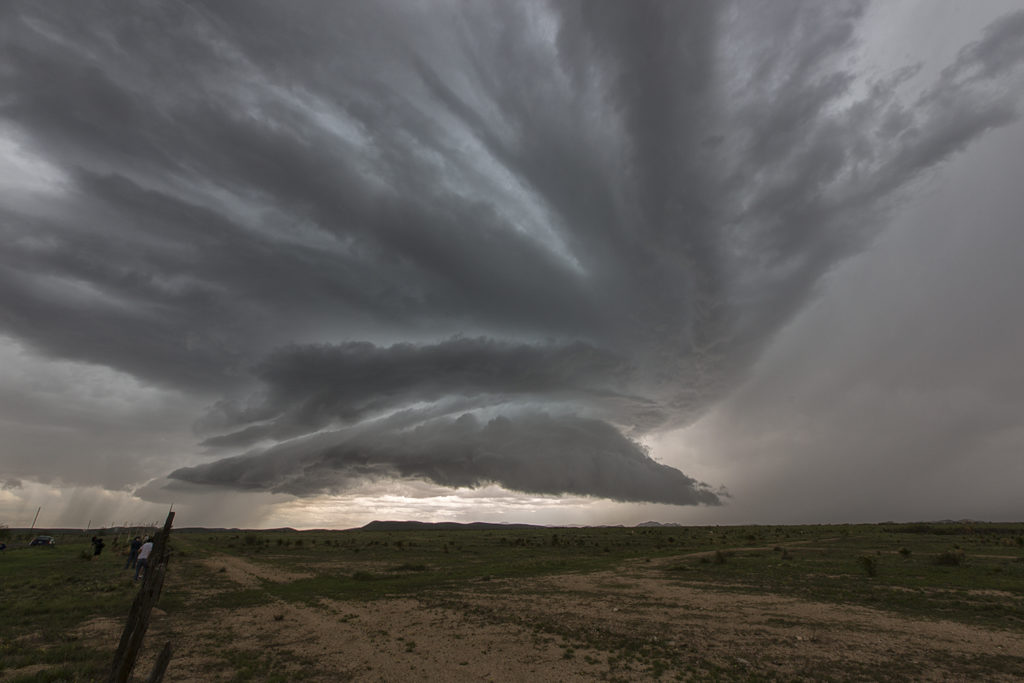
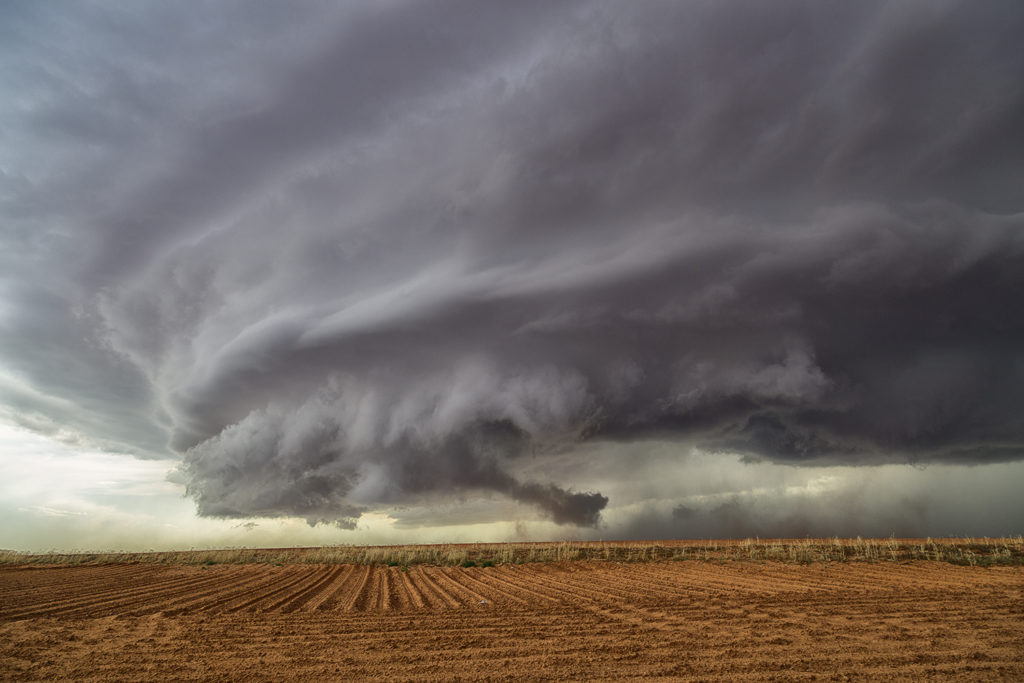
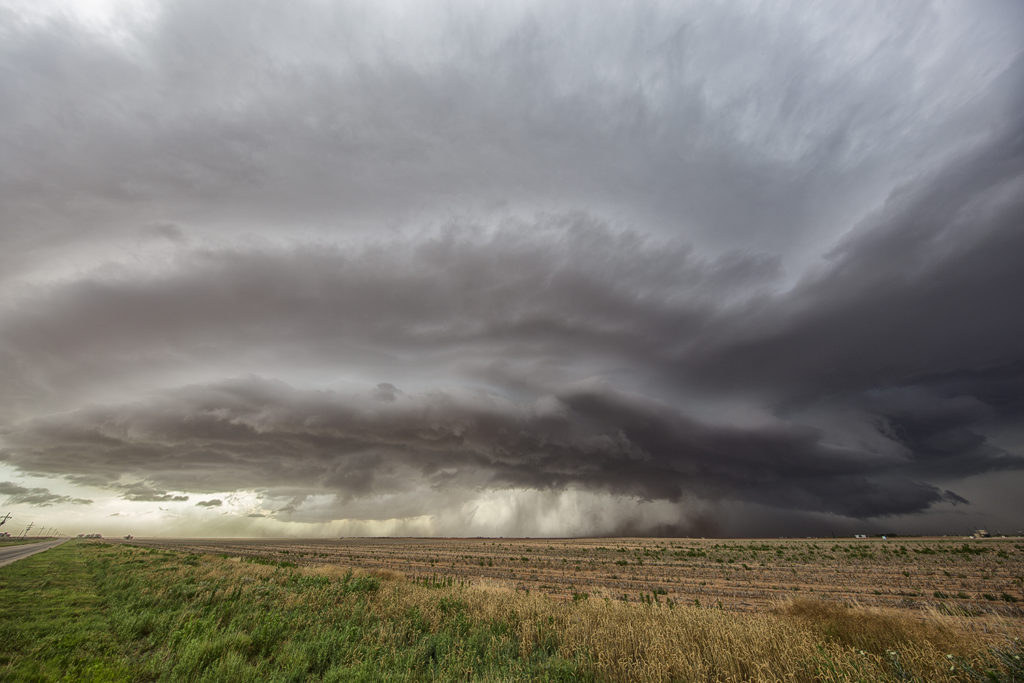
The latter part of May and early June was a period of little severe threat in the US. Record low numbers of tornadoes in this period would attest to the poor set up. We searched high and wide for those little needles in the haystack, sort of speaking, for any tidbit of severe weather we could find. May 31st was one of those days. A cluster of storms formed over west Texas, and one storm near Lamesa latched onto an old boundary and rode it, twisting, turning and spinning for a couple hours. It’s structure was pretty, and coupled with the red dirt of west Texas, made for an interesting sight!
May 23rd Northfield, Texas Night Tornadoes
May 23rd was a big day of ups and downs. Nature seemed to play a cruel joke on us and give us all the potential ingredients for a major severe weather event, but put all those ingredients too far east of the dryline in the Texas panhandle to do much good. Storms formed and were high based, never a tornadic threat, along the dryline. These cells would move off and die due to a capping inversion. Finally late afternoon one storm formed at the tail end of a cluster and moved far enough east to intercept 70 degree dewpoints and 4000 CAPE values. This storm would go crazy near dark and produce at least 2 significant tornadoes. The first tornado, a tapered cone, churned across the countryside west of Northfield, while the second tornado, a large EF3 multivortex turned wedge tornado, would be very close to Northfield. Lightning would illuminate this tornado and at one point, 4 bolts were visible around the tornado. An AMAZING event to say the least! Fortunately there were no fatalities from these tornadoes. Night time tornadoes are especially dangerous as you cannot see them unless they are lit by lightning or hit power lines to cause them to glow green. An incredible event to what would be the warm up day for the next day, the largest tornado outbreak in a couple years in western Kansas!
May 11th West Texas Supercell
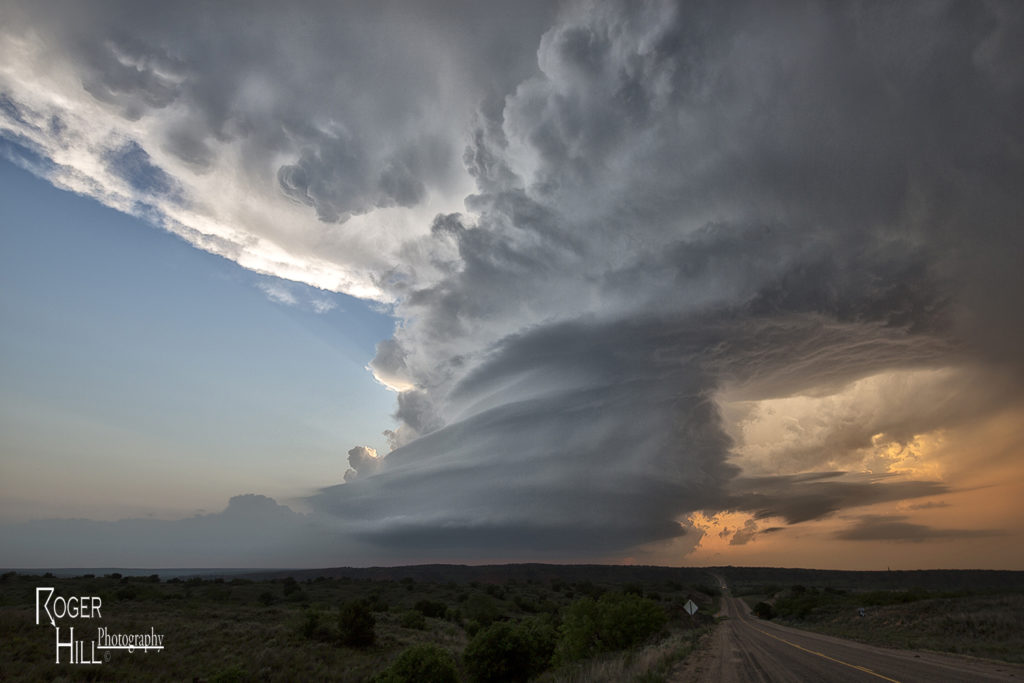
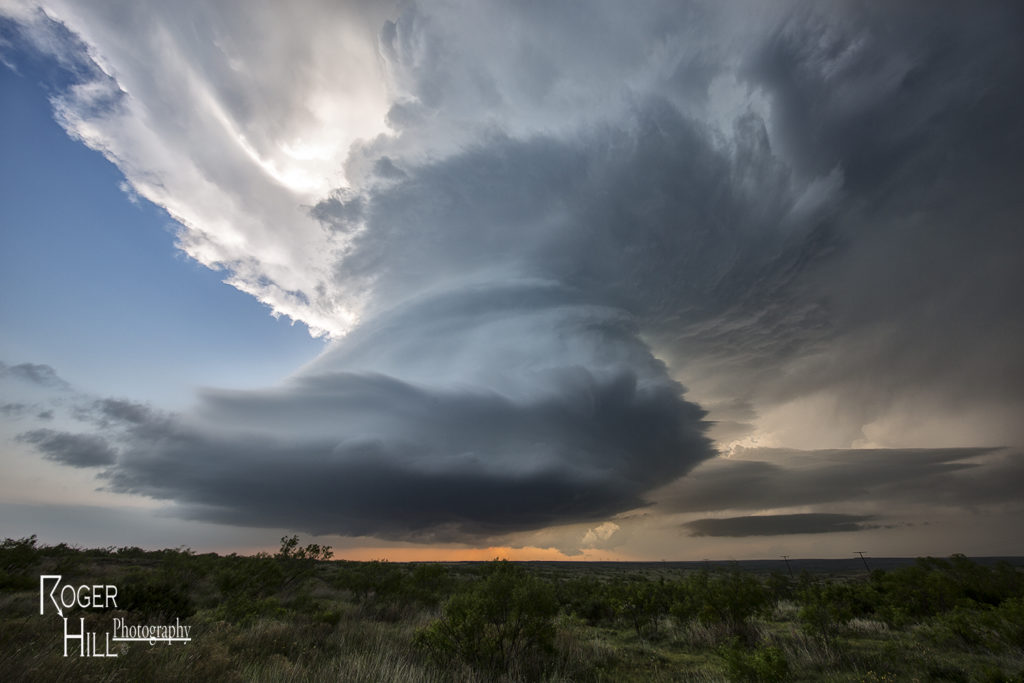
The set up this day was not ideal for tornadoes, but with moderate shear, instability, moisture and a dryline in place, we knew storms would fire along it. Due to large temperature and dewpoint spreads, cloud bases were fairly high, and thus storms became outflow dominant quickly. We intercepted several storms near the I-20 corridor west of Abilene that gave us some pretty structure, an occasional wall cloud and lots of lightning. They all were severe at times and even one became tornado warned. A big dusty haboob formed as the main cell turned into a line and eventually gusted out. At that point we dropped south on new cells and watched then rotate slowly and produce large hail.
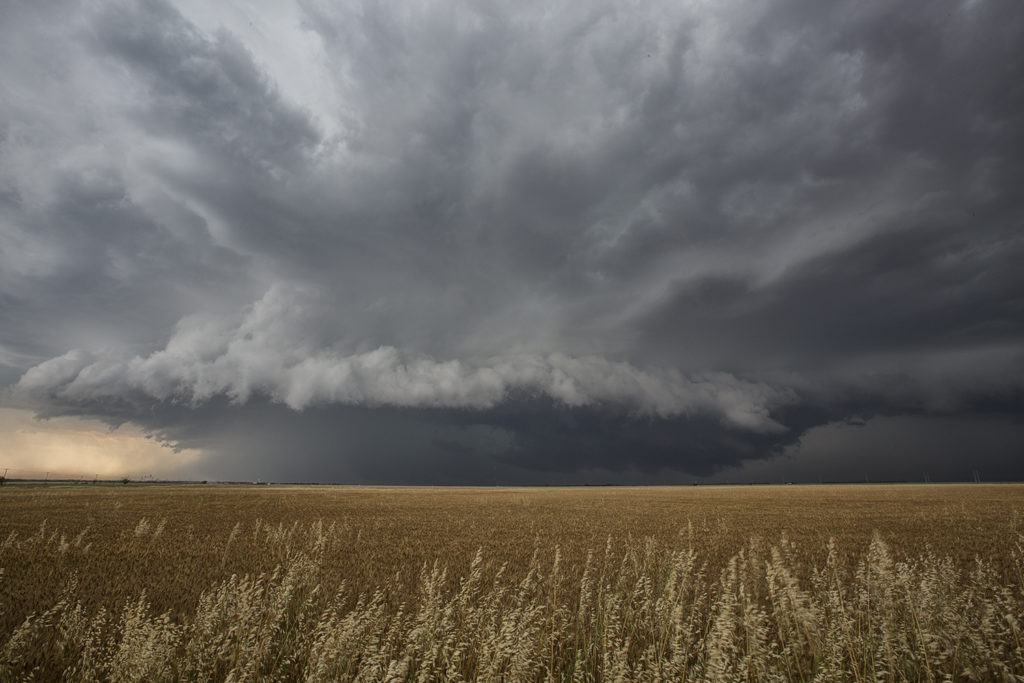
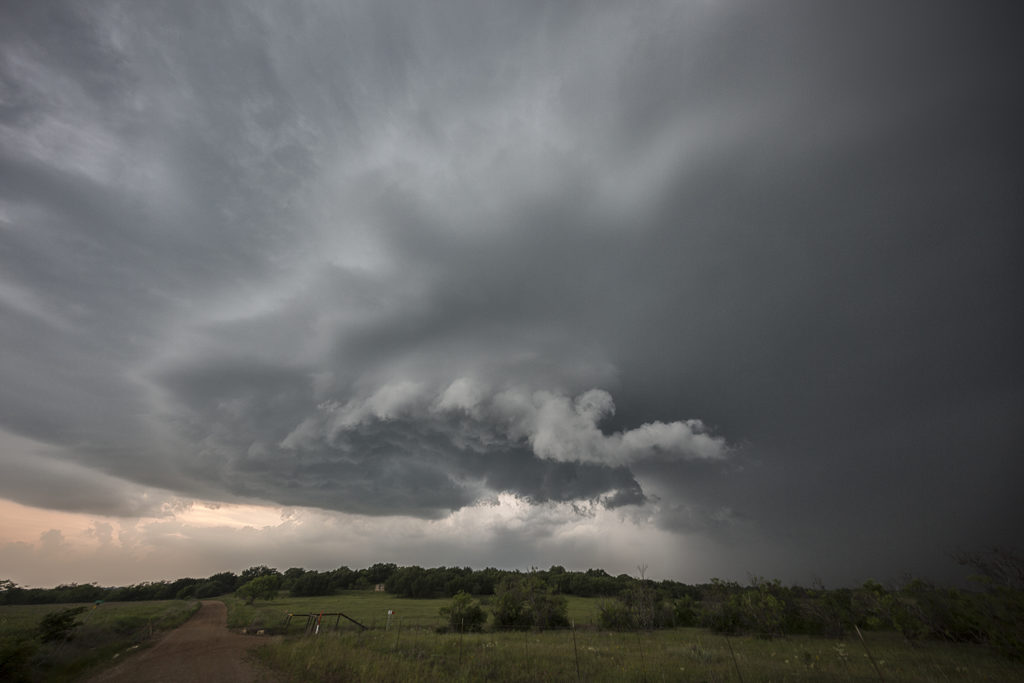
June 11th Southeast Colorado Supercell
June 11th had issues, but still produced some nice storms. Marginal moisture, but decent shear overlaid eastern Colorado. By mid afternoon storms formed along a boundary that stretched across east central and southeast Colorado. One particular supercell tracked along the boundary from north of LaJunta to far southeast Colorado. It struggled to stay on the moist side of the boundary occasionally, but managed to be quite a prolific hail producer. Never a real threat to produce a tornado, it did however manage to produce several short lived funnels. By early evening a cluster of storms formed south of Lamar. A tail end storm became a powerful supercell and was tornado warned for a couple hours. Visually it was stunning with constant rotation under the updraft. Two tornado reports came in, however they were not validated. As the supercell tracked into southwest Kansas, it became an outflow dominant storm and produced significant winds.
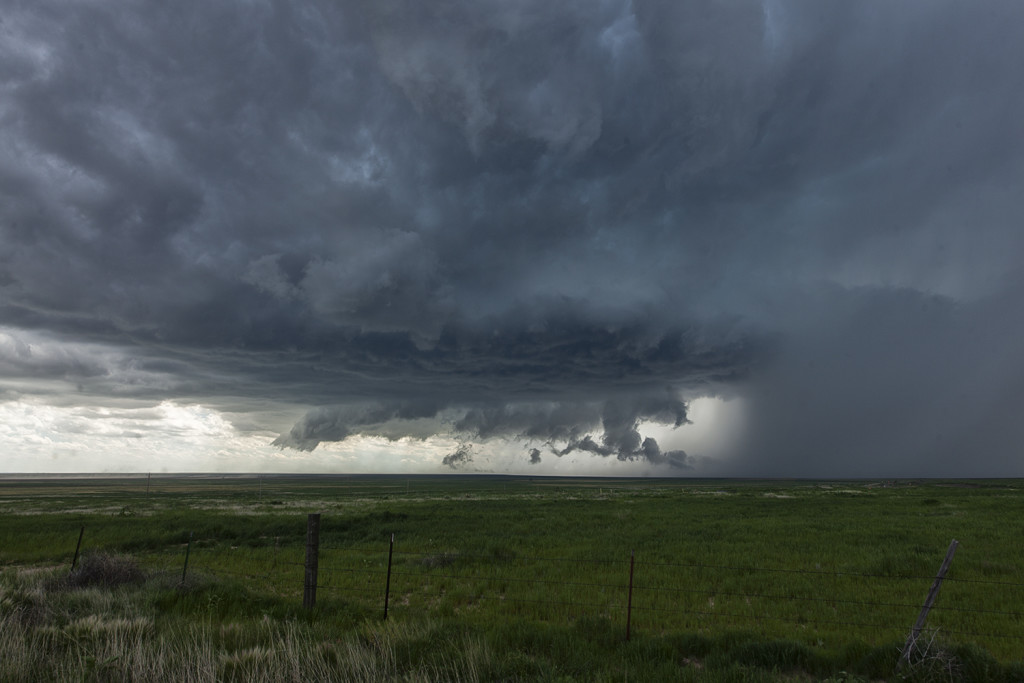
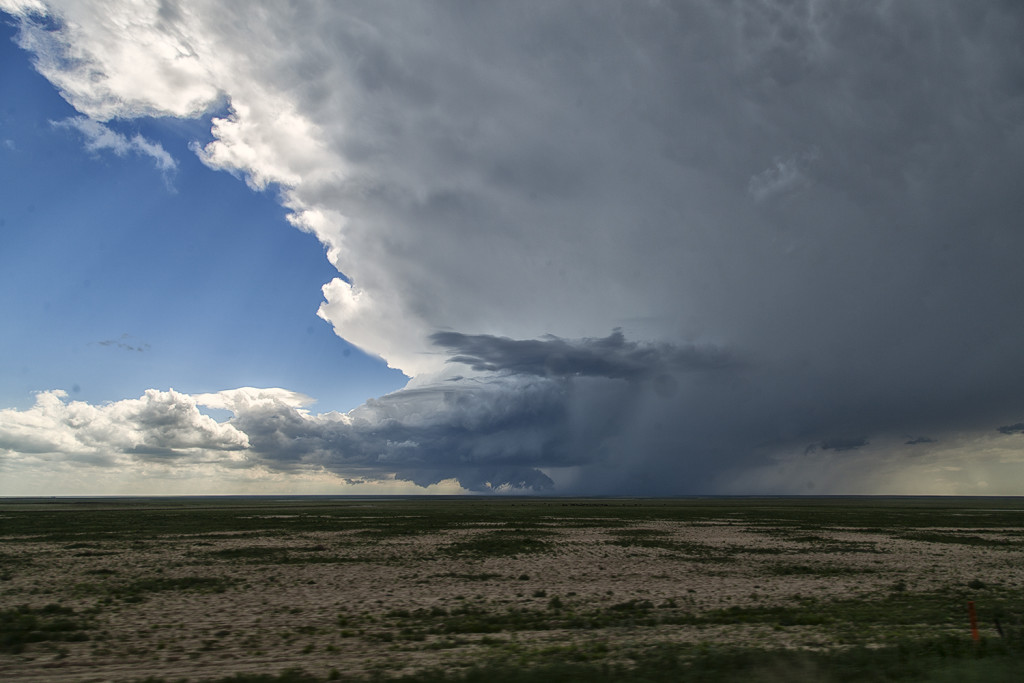
July 7th, 2003 Ogallala, Nebraska Windstorm
This day would prove to be a rather interesting day. Several storms developed in eastern Colorado and merged into on very large bow echo as it approached Nebraska. Wind gusted to over 100 mph and caused considerable wind damage. Trees were down, as well as power outages and minor structural damage. One thing for sure was that the shelf cloud that formed with this system was quite impressive.